
Through his commitment to democratic norms, debate, dissent and constitutionalism, Jawaharlal Nehru helped ensure that parliamentary democracy took deep root in independent India. Utkarsh Mishra evaluates Nehru's 17 years as India's first prime minister, examining his role in nation-building, democratic institution-building, economic planning, scientific advancement and foreign policy.

Rajaji, an ardent follower of Gandhi, was a freedom fighter, scholar, jurist, statesman and the first recipient of the Bharat Ratna along with S Radhakrishnan and C V Raman.
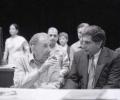
An exclusive excerpt from The Tatas: How A Family Built A Business And A Nation.
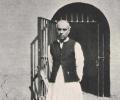
Social media posts and articles falsely suggest that Jawaharlal Nehru 'signed a bond' or 'used his father's influence' to escape from serving a prison term in Nabha in 1923. Utkarsh Mishra reveals the true story. The first of a series of occasional columns correcting social media's false take on History.
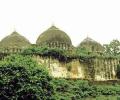
'The jurisprudence of a modern secular State has to be strictly rational.' 'Rather than aastha and aqeedah, our jurisprudence as well as the executive and legislature have to act in accordance with Constitutional rationality,' argues Mohammad Sajjad.

'Magnanimity and appeasement have no place in the world of realpolitik as India has learned the hard way,' notes Vivek Gumaste in the first of a two-part column.

Mohammad Sajjad salutes the memory of Mushirul Hasan -- historian, thinker, academic, institution builder, -- who passed into the ages this week.

The electoral bounty reaped by the Congress was nothing more than an ill-gotten gain of a casteist, divisive campaign; nothing to be proud of and certainly not a moral victory, argues Vivek Gumaste.

'One must remember that a dragon has a forked tongue,' warns Vivek Gumaste.
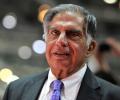
'I think Ratan felt he had to do everything that he could to retain control of the company started by his forefathers, because that was the first priority and nothing else mattered compared to that.'

An emotional Naidu said that destiny had stored something else for him, due to which he has to withdraw from the party. "I had told my colleagues that I want to see Prime Minister Modi come back again in 2019 and then I will call it off and join social service. But destiny decided otherwise. Finally after discussion, I have agreed. I have withdrawn myself from party, do not belong to BJP now," Naidu said.
Mr Tata said a letter had arrived in his office from a young woman who had applied for the graduate engineering programme of TELCO Pune and been turned down. 'I wouldn't interfere with your selection process, Maira,' he said. 'However, I am calling you because this lady says that her rejection letter says that though she is very well qualified for the programme, TELCO Pune cannot select her because she is a woman.' 'Why are you discriminating against women?' he asked. A must read excerpt from Arun Maira's The Learning Factory: How The Leaders Of Tata Became Nation Builders.

'The origins of the model of planned economic development adopted by independent India was a direct consequence of the war.' 'The war provided an opportunity for groups at the margins of Indian society to find new avenues for mobility.' 'The war also led to the emergence of India as a major Asian power and set the stage for it to play a wider role in international politics.'
'Nehru once told JRD, "I hate the mention of the very word profit".' '"Jawaharlal, I am talking about the need of the public sector making a profit!" JRD replied.' 'Nehru reiterated, "Never talk to me about the word profit, it is a dirty word".' A fascinating excerpt from Shashank Shah's The Tata Group: From Torchbearers To Trailblazers.
